

Browse Books
Leningrad: tragedy of a city under siege 1941-44. Anna Reid. 2011.
Leningrad: tragedy of a city under siege 1941-44. Anna Reid. 2011.
Couldn't load pickup availability
‘28 December 1941 at 12.30am - Zhenya died. 25 January 1942 at 3 pm - Granny died. 17 March at 5am - Lyona died. 13 April at 2am - Uncle Vasya died. 10 May at 4pm - Uncle Lyosha died. 13 May at 7.30am - Mama died. The Savichevs are dead. Everyone is dead. Only Tanya is left.’
Thus wrote a twelve-year-old girl in the pages of a pocket address book during the siege of Leningrad, the deadliest blockade of a city in human history.
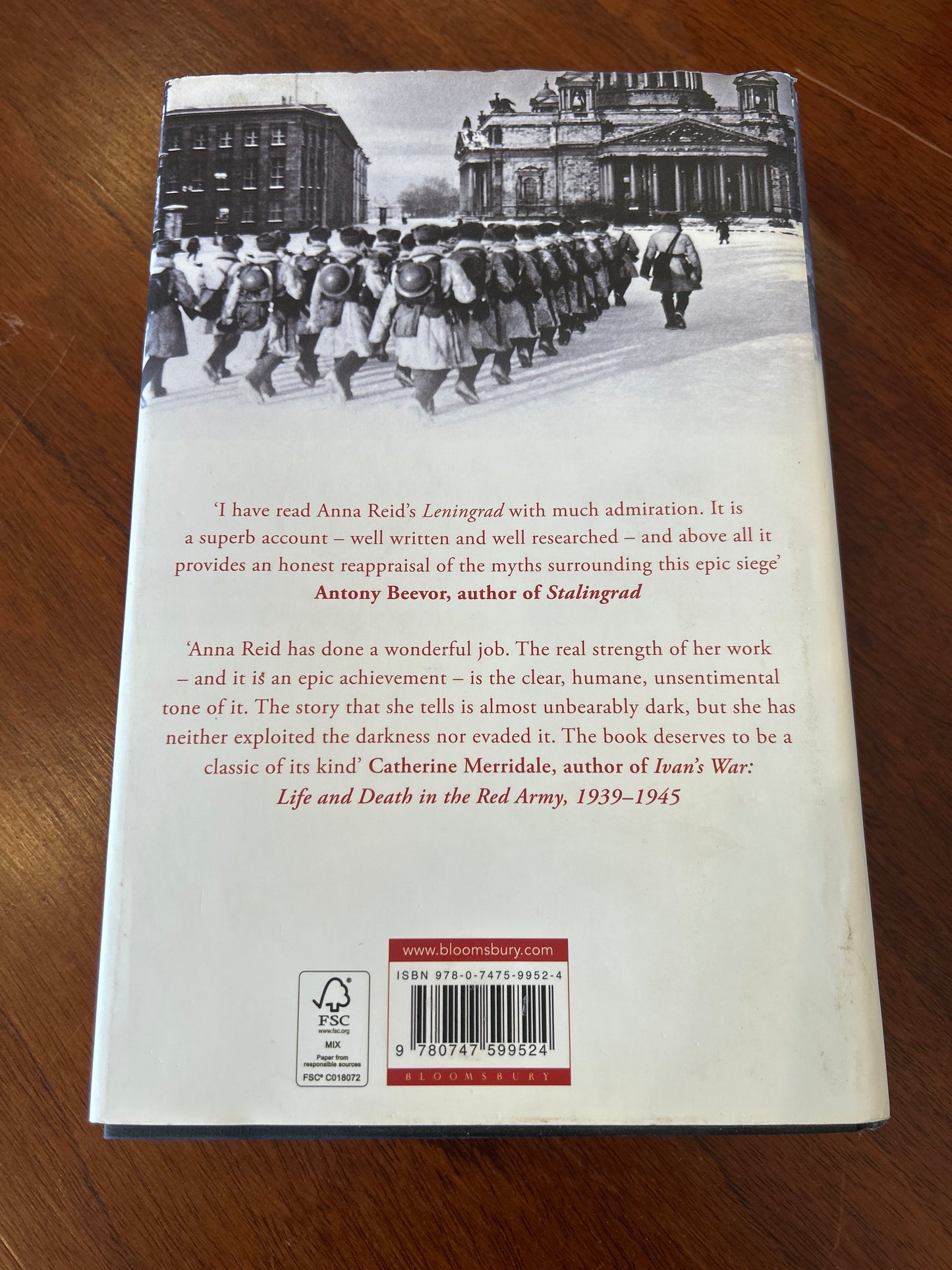
When Hitler made his surprise attack on the Soviet Union in June 1941, his intention was to capture Leningrad - Russia’s pre-revolutionary capital - before turning on Moscow. Soviet resistance forced him to change his mind: with his forward troops only thirty kilometres from the city’s historic centre, he decided instead to starve it out. Leningrad did not surrender, but for the next two winters no food was able to reach it, nor refugees to leave, save by air or across Lake Ladoga to its east. By January 1944, when the Wehrmacht finally began its long retreat, an estimated 750,000 civilians- a quarter to a third ofmLeningrad’s entire pre-siege population - had died of hunger.
Drawing on newly available diaries and government records, Anna Reid unflinchingly describes a modern European city’s descent into tragedy: the breakdown of electricity and water supply; the consumption of pets, joiner’s glue and face cream; the dead left unburied where they fell; the withering of emotions and family ties; looting, murder and even cannibalism - and at the same time, extraordinary endurance, bravery and self-sacrifice.
Share