

Browse Books
Crop weeds. J. L. Wilding, A. G. Barnett & R. L. Amor. 1986.
Crop weeds. J. L. Wilding, A. G. Barnett & R. L. Amor. 1986.
Couldn't load pickup availability
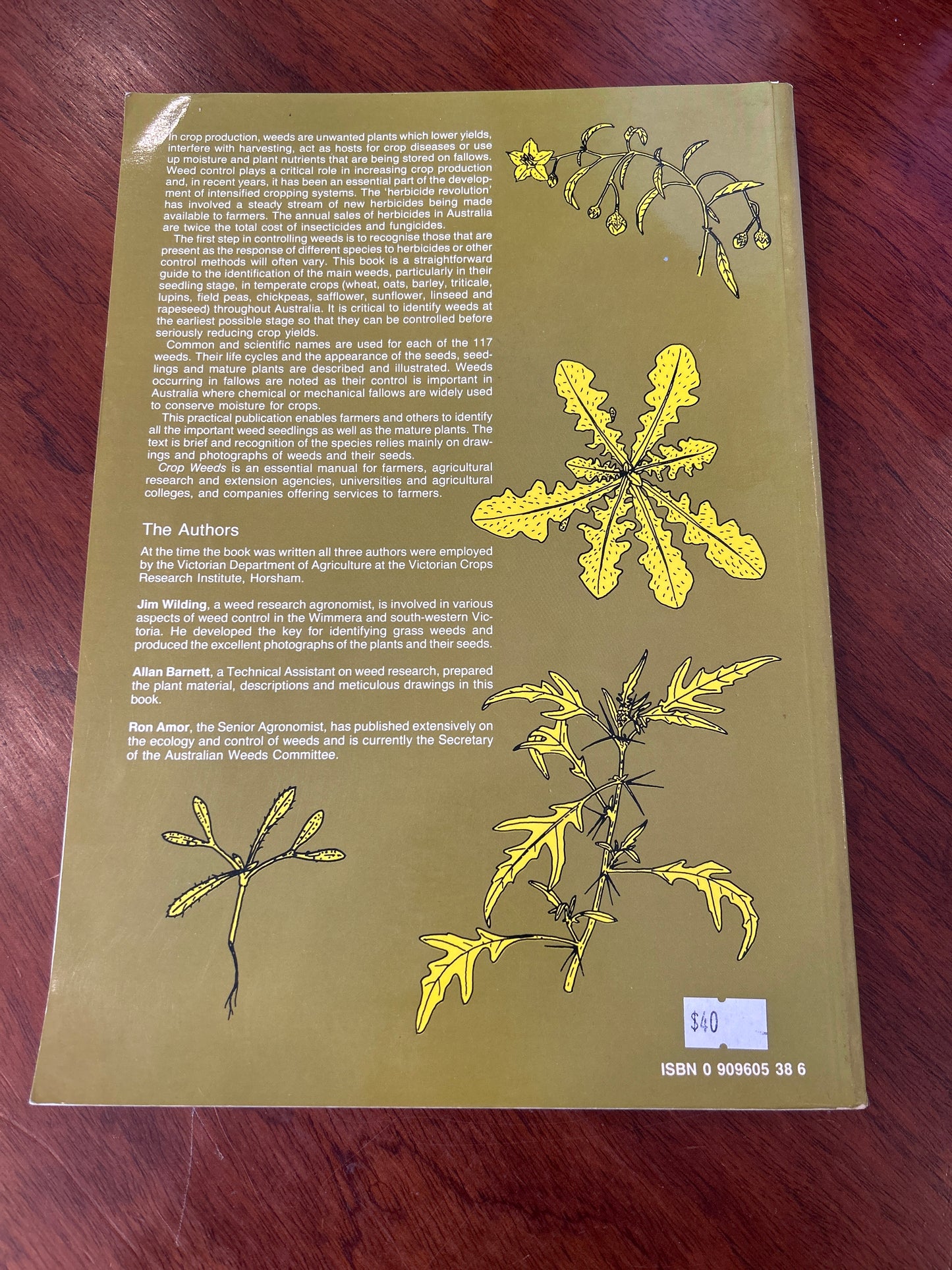
In crop production, weeds are unwanted plants which lower yields, interfere with harvesting, act as hosts for crop diseases or use up moisture and plant nutrients that are being stored on fallows. Weed control plays a critical role in increasing crop production and, in recent years, it has been an essential part of the development of intensified cropping systems. The ‘herbicide revolution’ has involved a steady stream of new herbicides being made available to farmers. The annual sales of herbicides in Australia are twice the total cost of insecticides and fungicides.
The first step in contrweeds is to recognise those that are present as the response of different species to herbicides or other control methods will often vary. This book is a straightforward guide to the identification of the main weeds, particularly in their seedling stage, in temperate crops (wheat, oats, barley, triticale, lupine, field peas, chickpeas, safflower, sunflower, linseed and rapeseed) throughout Australia. It is critical to identify weeds at the earliest possible stage so that they can be controlled before seriously reducing crop yields.
Common and scientific names are used for each of the 117 weeds. Their life cycles and the appearance of the seeds, seedlings and mature plants are described and illustrated. Weeds occurring in fallows are noted as their control is important in Australia where chemical or mechanical fallows are widely used to conserve moisture for crops.
Share